Showing posts with label writing. Show all posts

Tuesday, 6 August 2013

A Book to Read When You Realise that Writing Really is a Muscle

Posted by Daisy
 
I am a slow writer. Sometimes I would rather stick a needle in my eye than write. I love researching, meeting and interviewing people – it’s the scribing part that I find difficult.

After I broke up with Tall Guy with Glasses in April, I threw myself into work. I accepted every feature commission going, and spent at least twenty hours a week writing (on top of my day job).

However, as the months passed, something strange began to happen. One night, having faffed about all evening as usual – I had a nap, went jogging, ate dinner -  I finally sat down at 9 pm to begin to write a feature for a next day deadline. I fully expected to be bug-eyed at 3 a.m. tap-tapping away on my bed propped up by three pillows.

But two hours later, the piece was finished. Was I getting complacent? Maybe I hadn’t worked hard enough on it? Somehow, it didn’t seem as difficult as before. And my editor seemed to like it.

This began to happen with the next few features too. It simply became easier and faster to churn them out. And their quality was the same as if I’d spent ten hours writing instead of three.
 

The Revelation: Writing gets easier.

I never thought I’d see the day.

(However, having not written any features for the past few weeks, I’m assuming I’ll return to the 3am-blood-sweat-and-tears method with my next piece.)
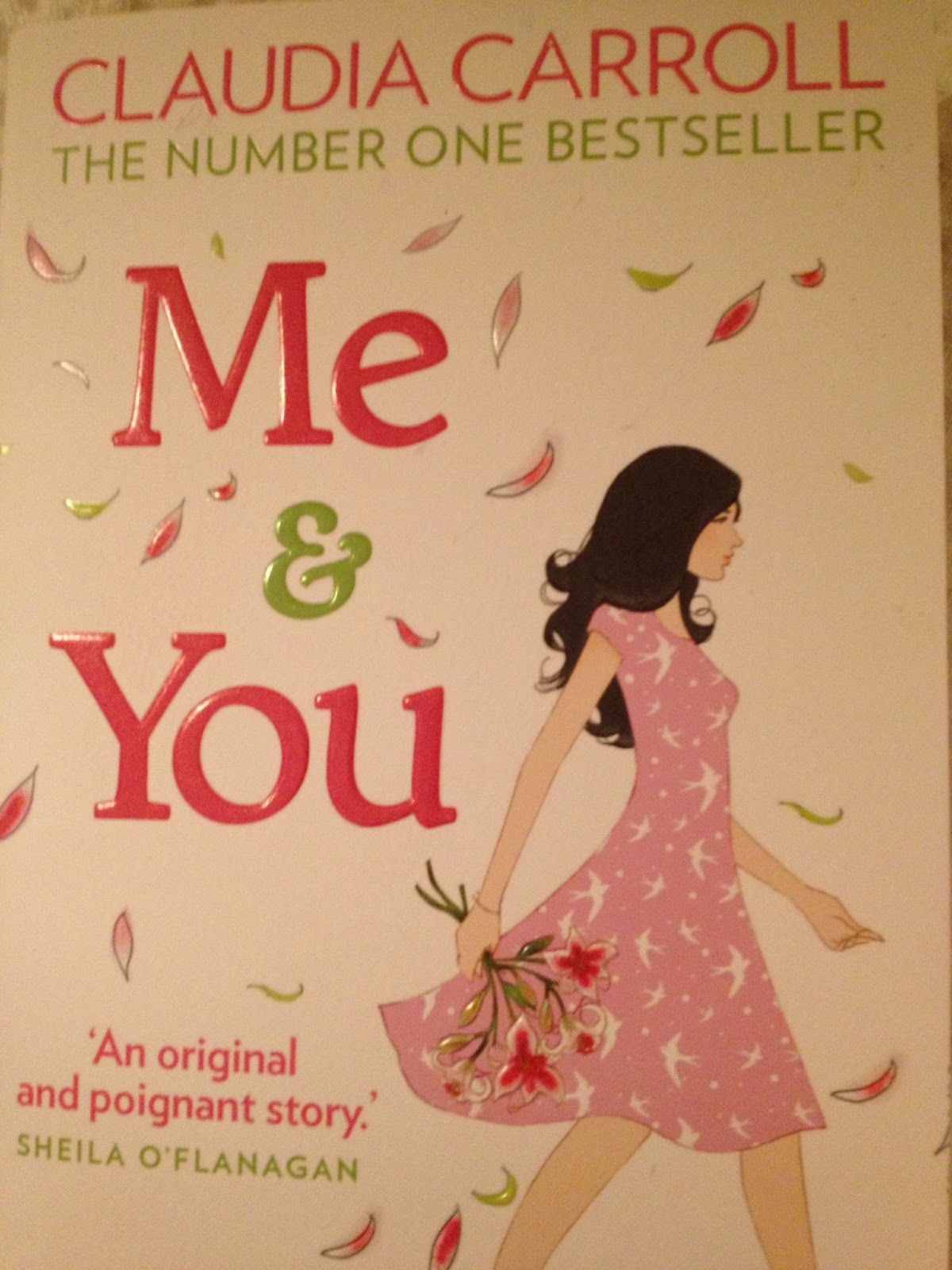
 
'Me and You' by Claudia Carroll
 
Having spent the past week packing up my apartment, finding dirt that I’d never seen before, handing over the keys to my new tenant and moving back home (it’s actually lovely for the two nights I’ve been here so far – nice dinners every night, and chats with my mum over the papers, mugs of tea, Ready Brek and bananas every morning), I haven’t read anything in a while.

I bought 'Me and You' today and can’t wait to start it. I love Claudia Carroll’s books and recently had a great chat with her over the phone for this blog. However, the notes are now packed up with all the other journalist notebooks from the last six years, in the attic of my old apartment. Clever, huh? Claudia told me hilarious stories about online dating, gave great encouragement for beginning writers, and said she loves living near RTE in Dublin because her actor friends from ‘Fair City’ pop over for lunch whenever they’re free.

‘Me and You’ is about a best friend who vanishes. It looks great. Review to follow.

Wednesday, 14 November 2012

Books to Read When You're Trying To Write

Posted By Daisy


Frank O’Connor said that writing means 'applying the arse of the trousers to the seat of the chair.’ Even if I have a next-morning deadline for a feature, I’ll still clean the house, go for a walk, de-clutter my wardrobe, watch repeats of ‘Keeping Up With The Kardashians’ or even worse ‘Two Broke Girls’, apply fake tan, smoke cigarettes, or make a Mars Bar cake. Eventually I’ll power up my laptop at about 9p.m., a momentous act in itself. And write until the early hours.
 
I have a pile of ‘How To Write’ books in my house. These include, in order of preference:

On Writing, Stephen King – Keep your writing simple. All adverbs are extraneous.

The Artist’s Way, Julia Cameron -  Write 3 pages of longhand, stream-of-consciousness writing every morning for the duration of this 12-week creativity course. Don’t bother reading back over them. They are simply a remedy for a creative block.

Any Writing 101 course will usually recommend King's or Cameron's book. Cameron recommends writing ‘Morning Pages’ every day – unfortunately I failed immediately, preferring the warmth of my bed in the mornings. Last week, I decided I would attend ‘Sunrise Yoga’ in town at 6a.m. and duly set the alarm. The following morning, I woke up at 9:30am, having missed yoga, and was very late for work. But I like Cameron’s idea of having a ‘Creative Date’ with yourself – once a week, take yourself off to an art gallery, or a beach, or watch an arthouse movie.

Write and Get Paid For It, Terry Prone: One of my favourite writing books is Terry Prone’s ‘Write and Get Paid For it’. First published in 1979, it is outdated now, but the basic ideas are still very relevant. Especially good for freelance journalists, it gives great advice on organising ideas/archiving features. And Prone advises not to worry about rejection, or age.

Writing for the Market, Patricia O’Reilly: Another oldie – it gives great advice for would-be feature writers, with interviews from features editors of Irish newspapers. O’Reilly recommends always being on the alert for feature ideas. When I started feature writing, my biggest conundrum was where to get ideas. Now I know that feature ideas are ever-present and there for the taking.  I went hillwalking for the first time last week, and have a pitchable feature idea from the day.

O’Reilly also recommends having a niche subject. I have one which I have a huge interest in and knowledge of (i.e. my day job) and so often get called by editors when newsworthy topics about this subject appear.

Travel Writer’s Guide, Gorgon Burgett: Burgett advises on re-selling travel features -  by the time you’ve sold your feature five or six times, it’s almost a sin. I have still to figure out how to do this. He also recommends avoiding negativity in travel features. I once wrote a travel feature about Easter Island, recommending that people simply ‘buy the DVD’ rather than travelling to the island to get ripped off by the locals. It wasn’t the best feature I ever wrote.

The Maeve Binchy Writer’s Club, Maeve Binchy: Keep a journal recording overheard snippets of conversation, ideas, quotes and details of competitions, prizes and awards. Deadlines are important.

Write a Book in A Year, Jacinta McDevitt: Write 410 words everyday. You have three goals – to start, to keep going, and to finish.

How to Get Published and Make a Lot of Money, Susan Page: I got this as a present and have never read it. However, a quick skim through advises that very few people make a living by writing alone. Most people have co-occupations too. Don’t give up the day job.

Even though I procrastinate, there is nothing better than the feeling of re-reading a well-written, finished piece. Because a writer always knows when a piece is well-written, and when a piece is mediocre. I still get excited when I see my by-line in a newspaper, and I hope that never goes away.
(Top illustration by Marc Johns)